Can Foreigners Buy Property in Las Terrenas? Complete 2026 Buyer Guide

Updated: Aug 26
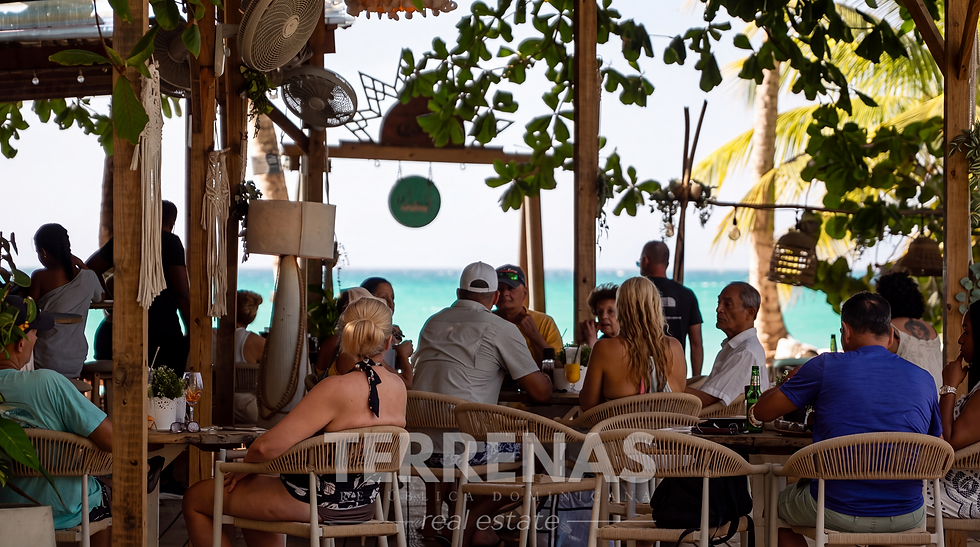
A foreigner can purchase property in Las Terrenas in their own name, and foreign individuals and companies are generally allowed to own Dominican real estate. You do not need to become a Dominican resident first simply to purchase a home, condo, villa or land.
That is the simple answer.
The more important question is: How do you buy property in Las Terrenas safely?
Buying here is not especially complicated, but the process may be different from what buyers know in the United States, Canada or Europe. Understanding the title, deslinde, reservation agreement, lawyer's role, taxes and final registration can prevent expensive mistakes.
In this blog we will try to open this topic clearly and answer most of the questions people ask or need to know the answers before buy or invest.
So how Does Buying Property in Las Terrenas actually Work?
Every transaction is slightly different, especially when comparing a completed resale property with pre-construction.
But a typical purchase looks something like this:
Property selected → price negotiated → reservation → lawyer → due diligence → Promise of Sale → payments → final sale → taxes → registration → new title
Let's break that down.
1. Choose the Property and Agree on the Main Terms
Before worrying about paperwork, you normally agree with the seller or developer on the commercial terms.
That can include:
Purchase price
Reservation amount
Payment schedule
Furniture included or excluded
Closing date
Delivery date
Conditions of the sale
Financing, if applicable
With pre-construction properties, the payment schedule may extend through different stages of construction.With a completed resale property, the process can be considerably shorter.
But this is where we recommend separating finding the property from legally approving the property.Liking a property is not the same as confirming that everything behind it is legally in order.
2. Understand the Reservation Deposit Before Paying It
A reservation payment is common in real-estate transactions because it can temporarily remove a property from the market while the transaction moves forward.But do not treat a reservation payment as just another credit-card-style booking.
Before sending money, understand in writing:
How much are you paying?
Is it refundable?
Under what circumstances is it refundable?
How long is the property reserved?
What happens if legal due diligence discovers a problem?
What happens if you change your mind?
What happens if the seller withdraws?
Is the reservation credited toward the purchase price?
Dominican real-estate legal guidance specifically recommends that prospective buyers obtain legal representation before signing documents or making a deposit, or make the transaction conditional upon satisfactory due diligence. One rule we would give every buyer:
The larger the payment, the more important it is to know exactly what protects your money before you send it.A beautiful rendering, a respected broker or a promising development is not a replacement for a properly written contract and independent legal review.
3. Hire an Independent Dominican Real-Estate Lawyer
Your real-estate agent helps you find, evaluate and negotiate the property.Your lawyer has a different job.The lawyer should protect the legal side of your purchase.That includes checking the seller, property documentation, registered ownership, liens or mortgages, taxes, survey information and the contract you are being asked to sign. A proper title search should establish who the registered owner is and what mortgages, liens or other encumbrances are recorded against the property.For a foreign buyer, this distinction is particularly important.Your broker should help you make a good property decision.Your lawyer should confirm that you can safely complete that decision.
4. What Is a Dominican Certificate of Title?
This is one of the most important concepts to understand.
A Certificate of Title — Certificado de Título — is the official document issued by the Dominican real-estate registry that establishes registered ownership of a parcel or condominium unit. The Dominican Registro Inmobiliario describes it as an official document issued and guaranteed by the Dominican State that confirms the existence and ownership of the real-property right. In simple terms: You don't just want someone telling you that they own the property. You want the registered documents to prove it. Your attorney should verify that the person or company selling the property has the legal right to sell it and investigate any registered charges or restrictions affecting it.
5. What Does “Deslinde” Mean?
You will hear this word frequently when buying property in the Dominican Republic.
In practical terms, deslinde relates to the formal surveying and individualization of the property's boundaries within the Dominican cadastral system. The Registro Inmobiliario distinguishes an individually determined parcel from a simple portion of land whose exact geometric dimensions, location and individual cadastral designation have not been established through the corresponding parcel survey. Think of it this way: A title tells you who owns the real-estate right. The cadastral survey helps establish exactly which piece of land that right corresponds to. This becomes especially important when buying land. If someone shows you a beautiful 2,000 m² hillside lot with ocean views, your lawyer and surveyor need to make sure that the land physically being shown to you corresponds to the legal property being sold. A professional legal review should therefore examine both the ownership documentation and the property's survey information.
6. What Does the Lawyer Check During Due Diligence?
Due diligence is probably the least exciting part of buying a Caribbean property. It may also be the most important. Depending on the property, your lawyer may verify:
Certificate of Title
Registered owner
Mortgages
Liens and other registered encumbrances
Survey/deslinde
Seller identification
Property-tax status
Authority of a company representative to sell
Condominium documentation
Outstanding condominium fees
Construction documentation
Relevant permits
These are among the items identified in established Dominican real-estate due-diligence guidance.
For a villa or condo, it is also smart to look beyond the title. Legal ownership does not tell you whether the roof leaks, whether the pool equipment needs replacing or whether the electrical installation was done properly. A legal inspection and a physical property inspection serve different purposes.
7. What Is the Promise of Sale?
The Promise of Sale — Promesa de Venta — is often one of the most important documents in the transaction. It normally establishes the essential agreement between buyer and seller, including the property, purchase price, payment terms, delivery conditions, default provisions and the obligations that must be completed before the final transfer. A well-written agreement should make it clear:
What are you buying?
How much are you paying?
When are you paying?
When is the property delivered?
What must the seller do?
What happens if the buyer defaults?
What happens if the seller defaults?
What happens if due diligence discovers a serious legal problem?
These questions matter much more than whether the contract looks impressive or contains 30 pages.
8. How Is Buying Pre-Construction Different?
Pre-construction requires extra attention because you are purchasing something that may not yet physically exist in its final form. You therefore need to investigate both the property and the project behind it. Before committing significant funds, your legal review should consider the documentation supporting the development, the seller/developer's authority, the underlying property and title situation, the contractual payment structure, delivery obligations and applicable permits. Payments should also be evaluated against the contractual protections and construction obligations attached to the transaction. Pay particular attention to:
Delivery date: When is the developer obligated to deliver?
Grace period: Is additional construction time allowed?
Late delivery: What happens if the developer misses the contractual deadline?
Buyer default: What happens if you miss a payment?
Developer default: What happens if the project cannot be completed?
Specification: What exactly is included in the finished property?
Payment milestones: How much money is paid before completion?
Don't evaluate pre-construction only from the render and price per square meter.
The contract is part of the property you are buying.
9. How Much Is the Property Transfer Tax?
For an ordinary taxable real-estate transfer, the Dominican tax authority currently states that the real-estate transfer tax is 3% of the value of the property used for the transfer calculation.
There can be exceptions. One particularly important exception for buyers in Las Terrenas concerns qualifying tourism developments under CONFOTUR.
10. What Is CONFOTUR and Why Do Buyers Care?
CONFOTUR is one of the terms foreign buyers encounter constantly when researching new projects in Las Terrenas.Approved tourism projects can receive tax incentives under the Dominican tourism-development regime. The Ministry of Tourism currently lists incentives that can include exemptions relating to real-estate transfer taxes and IPI, among other benefits, for qualifying projects. It states that the incentive period for qualifying new-construction projects is 15 years from completion of construction. The DGII's 2026 IPI guidance also specifically identifies qualifying properties under Law 158-01 belonging to first individual purchasers among the applicable IPI exemptions. That can make CONFOTUR financially attractive. But there is an important warning:
Never stop your investigation at “This project has CONFOTUR.”
Ask:
Has the project actually been approved?
What classification does it currently hold?
Does the benefit apply to your particular unit and purchase?
Which exemptions apply?
When does the exemption period begin and end?
Have your lawyer verify the project's documentation rather than relying only on marketing material.
11. Is There an Annual Property Tax in the Dominican Republic?
Potentially, yes. The Dominican Impuesto al Patrimonio Inmobiliario (IPI) is an annual property tax applicable to individuals and trusts under the rules established by the DGII. For 2026, individuals are subject to a 1% tax on the taxable real-estate value exceeding RD$10,695,494 in cumulative taxable property holdings, subject to the applicable exemptions.
That threshold is adjusted periodically, which is why buyers should check the current figure rather than rely on an old article quoting a dollar amount. CONFOTUR-qualified property may also receive an applicable IPI exemption, depending on the approved project and purchaser conditions.
12. Should You Buy Personally or Through a Company?
Both structures are possible. There is no universal answer saying that every foreign buyer should create a Dominican company. For someone buying a single vacation home, personal ownership may be simpler. For someone building a larger investment portfolio, operating a rental business, buying with partners or considering estate planning, corporate ownership may be worth investigating.
But a company should not automatically be viewed as a way to avoid taxes. Dominican companies have their own accounting, filing and tax obligations. The DGII currently states that legal entities generally face a 1% tax on taxable assets, subject to applicable rules and exemptions. Your choice can also create consequences in your home country. A Canadian, American, French, British or other foreign buyer may have reporting or tax obligations outside the Dominican Republic that are completely separate from Dominican law. That is why the ownership structure should be chosen before closing, with appropriate Dominican and home-country tax/legal advice when necessary.
13. Can I Buy Property in Las Terrenas Without Being in the Dominican Republic?
In some transactions, yes. Dominican consular procedures allow powers of attorney to be prepared so another person can act on behalf of an individual in the Dominican Republic, including for property-related transactions, subject to the required formalities. That means an international buyer may not necessarily need to fly back to the Dominican Republic for every signature or administrative step. But the exact documentation depends on the transaction and the country where documents are being signed, so this should be coordinated with the buyer's lawyer.
14. When Do You Actually Become the Registered Owner?
Signing a contract and becoming the registered owner are not exactly the same step.
After the final transaction documents and applicable taxes are completed, the transfer is submitted to the Dominican Registro de Títulos. The transaction is then registered and the new ownership is reflected in the real-estate registry. Dominican real-estate registration operates through a title-registration system in which registered rights and interests in the property are recorded through the Registry of Title. For the buyer, the important final objective is simple: The property should ultimately be properly registered in your name or in the name of the entity that purchased it.
Do not mentally finish the transaction simply because you received the keys. Finish the registration too.
Buying property as a foreigner in the Dominican Republic is absolutely possible.The key is not to make it more complicated than it needs to be — but also not to skip the checks that matter.
Start with the right property.
Understand the price and payment terms.
Use an independent lawyer.
Verify the title and survey.
Understand the contract.
Know the taxes.
And complete the registration properly.
At TerrenasRD Real Estate, we help international buyers discover and compare properties throughout Las Terrenas — from condos and pre-construction opportunities to villas, land and beachfront real estate.Our goal is not simply to show you listings.
It is to help you understand what you are buying, compare the options available and make the decision that actually fits your plans in Las Terrenas.
This guide is provided for general informational purposes and reflects information available in 2026. Real-estate, tax and legal circumstances vary by transaction and can change. Buyers should obtain independent Dominican legal and tax advice for their specific purchase.

Comments